
Condition We Treat
Stop Living With Dancers and Performing Arts Injuries
You've tried everything. The pain keeps coming back. At R3 Physio, we find the real root cause — not just the symptom.
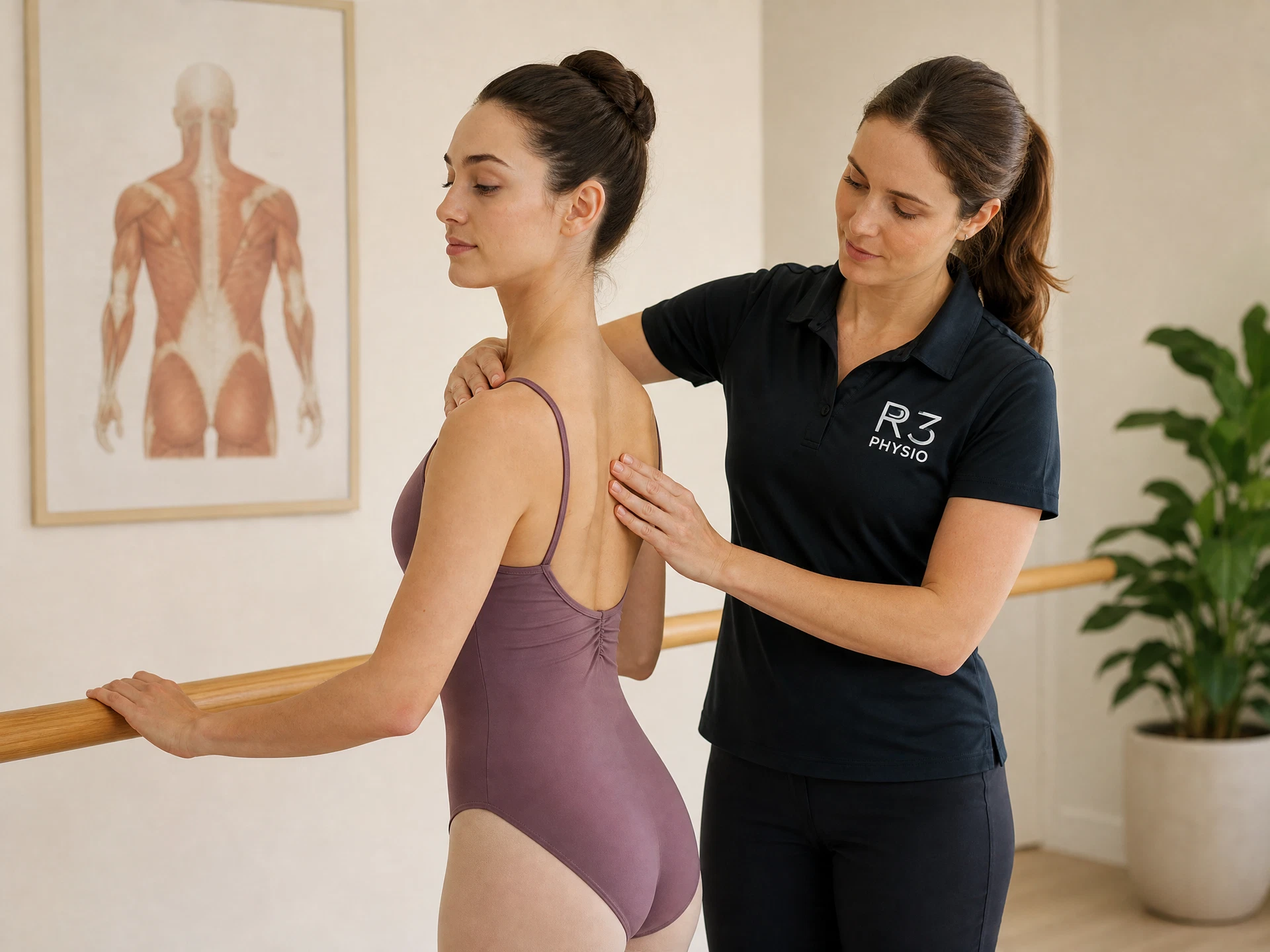
Understanding Dancers and Performing Arts Injuries
What Is Dancers and Performing Arts Injuries?
Your body is your instrument. When you're a dancer, musician, or performer, repetitive movements, unusual postures, and the relentless demands of your art form create injuries that generic physical therapy doesn't touch. You've probably tried traditional PT, gotten a sheet of exercises, and felt better for a few weeks—then the pain returned the moment you returned to rehearsal or performance.
Performing arts injuries aren't simple muscle strains. They're the result of movement patterns built over years, fascial restrictions, postural compensations, nervous system sensitivity, and the specific demands of your art. A 10-minute PT session and a generic exercise sheet won't uncover why your shoulder keeps failing before the big show, or why your hip flexors scream after rehearsal.
R3 Physio treats performing artists differently. We spend a full hour with you, evaluate your whole body as an interconnected system, and identify the root cause—not just the pain site. We're willing to step into the impossible. That means keeping you performing while we rebuild your resilience from the ground up.
Signs You Might Have Dancers and Performing Arts Injuries
Common Symptoms
- Persistent pain that won't resolve
- Pain that limits your daily activities
- Symptoms that return after temporary relief
What Causes It
Common Causes
- Compensatory movement patterns
- Fascial restrictions
- Nervous system dysregulation
Our Approach
How We Treat Dancers and Performing Arts Injuries
At R3 Physio, we don't just treat the painful area. We evaluate your whole body — fascia, gut, pelvis, airway, nervous system — to find the real root cause.
Full-Body Systems Evaluation
During your 75–90 minute initial evaluation, Your Therapist assesses you as a whole system—not just the painful area. We review fascia, pelvis, airway, nervous-system function, scars, posture, and movement patterns specific to your art form to identify the root cause.
Targeted Fascial & Movement Restoration
We use hands-on fascial techniques, breathing work, and precision movement drills to release restrictions and rebuild resilience. This is not generic stretching or the same exercises every PT gives you. It's specific to your body, your art form, and your performance demands.
Nervous System Retraining & Load Management
If your pain is wired into your nervous system (common in chronic injuries), we desensitize it through graded exposure and movement quality. We also coach you on load management so you can perform while we rebuild, not stop.
Integration & Performance Resilience
As you progress, we integrate your new movement patterns back into your art form. The goal: not just pain relief, but a resilient body that handles the demands of your performance calendar year-round.
Your Journey
What To Expect
- 1
Discovery Call (Free or Paid Consultation): You'll meet Your Therapist, ask questions, and get a clear sense of whether we're the right fit. No pressure. We'll explain what we find and outline a plan of care if you decide to move forward.
- 2
Initial Evaluation (75–90 Minutes): Your first paid session is a deep-dive evaluation. Your Therapist assesses your entire body, movement, posture, and the specific demands of your art. You'll leave with clarity on your root cause and a written plan of care.
- 3
Treatment Plan (Typically 6-12 Weeks): You'll return 1-2x per week for 60-minute sessions. Each visit includes hands-on work, nervous system retraining, breathing, and movement-specific drills. Between sessions, you'll have a home practice to reinforce progress. Your Therapist tracks your improvement and adjusts the plan as you heal.
- 4
Maintenance & Long-Term Resilience: Once you're performing pain-free with a resilient body, you may move to monthly tune-ups to prevent recurrence. You'll have the tools and awareness to stay strong for the long haul.
Why Choose R3 Physio
The R3 Difference
We Understand Performing Artists
Most PTs don't train dancers, musicians, or performers. We do. We know the postural demands of your art form, the psychology of performance anxiety, and the unique injuries your body faces. We speak your language.
Focused, Team-Based Care
You receive dedicated one-on-one time with an R3 Physio therapist—no group classes, no rushed check-ins, and a plan that adapts as your body and performance demands change.
Root-Cause, Whole-Body Approach
We don't treat the painful shoulder or hip in isolation. We evaluate your fascia, pelvis, airway, nervous system, and movement patterns. The real cause often lives somewhere else. That's where the healing happens.
You Stay Performing
We work with you to keep you in rehearsal and on stage while we rebuild. Unlike surgery or aggressive rest protocols, we manage load intelligently so you don't miss your season.
Frequently Asked Questions
Questions About Dancers and Performing Arts Injuries
I've been told surgery is the only option. Can you help without surgery?
Will I have to stop performing while I'm in treatment?
How is this different from the PT I already tried?
How long does treatment typically take?
Is R3 Physio covered by insurance?
What if I'm skeptical? Can I try a session without committing?
Also We Treat
Related Conditions
Sports Injuries
A sports injury stops you cold. Whether it's a runner's knee, a golfer's shoulder, a dancer's ankle, or a gym-goer's low back, the moment you get hurt, your world shrinks. You can't train. You can't compete. You can't move the way you know your body should.
Learn morePre Post Operative Rehab
You've been told you need surgery—or you're scheduled for one. Now you're wondering: What happens after? Will I recover fully? How long until I'm back to my life?
Learn moreChronic Pain
This condition affects many active adults in the Keller/Ft. Worth area. At R3 Physio, we take a whole-body approach to understand what's really driving your symptoms.
Learn moreStop Chasing Symptoms. Start Rebuilding Your Resilience.
You've tried the 10-minute PT sessions and the exercise sheets. They helped for a week, then the pain came back. That's because you're treating the symptom, not the cause. R3 Physio specializes in performing artists. We spend a full hour with a Doctor of PT, evaluate your entire body, and identify the root cause—fascia, pelvis, airway, nervous system, movement patterns—then rebuild you from the ground up. You can keep performing. We'll keep you pain-free and resilient for the long haul. Book your free Discovery Call today. No pressure, no commitment.