
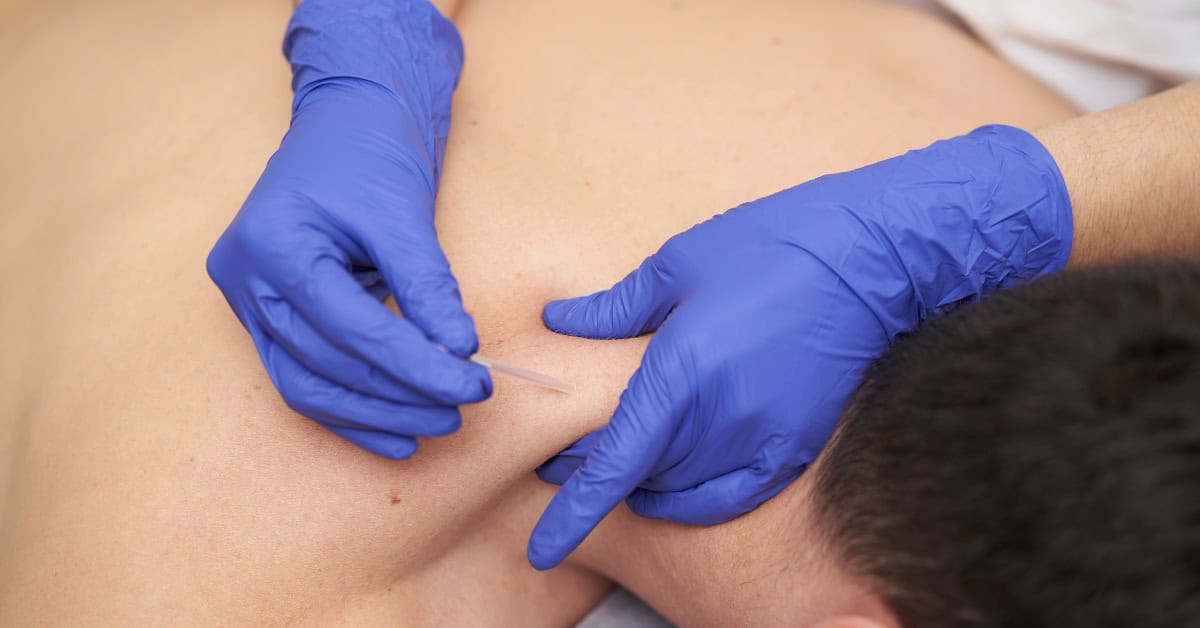
Does Dry Needling Hurt?
If you are considering therapies to reduce pain, you might be wondering whether dry needling hurts. The answer depends on your nervous system, sensitivity levels, and the area being treated.
You might feel a quick pinch as the needle enters the skin, followed by a dull ache, slight pressure, tingling, or a brief muscle twitch. Your provider can adjust the technique to make the experience as comfortable as possible.
How Is Dry Needling Different From Acupuncture?
Dry needling and acupuncture both use thin filiform needles, but their goals and methods are different. Dry needling is a modern technique used by licensed physical therapists to address musculoskeletal pain, muscle function, and neuromuscular dysfunction.
Common Side Effects and Safety
When performed by a licensed physical therapist trained in dry needling, this therapeutic technique follows strict hygiene protocols. Most people experience little discomfort after a session.
Mild post-treatment effects can include temporary soreness similar to a deep-tissue massage, mild aching at insertion sites, or a short-lived twitch or cramping sensation during treatment. These effects commonly settle within 24 to 48 hours.
- Drink water and keep movement light if you are sore after treatment.
- Tell your therapist about your sensitivity, medical history, and any questions before treatment begins.
- Dry needling is most effective when used as part of a comprehensive physical therapy plan.
A Systems-Based Approach at R3 Physio
At R3 Physio, neurological dry needling is used as part of a comprehensive approach to pain, movement, and healing. Instead of treating only a local trigger point, care considers local, segmental, and whole-body contributors to your symptoms.